
Built for Someone Else
The wine industry's majority customer has been there all along. The question is whether it is ready to fully hear her.

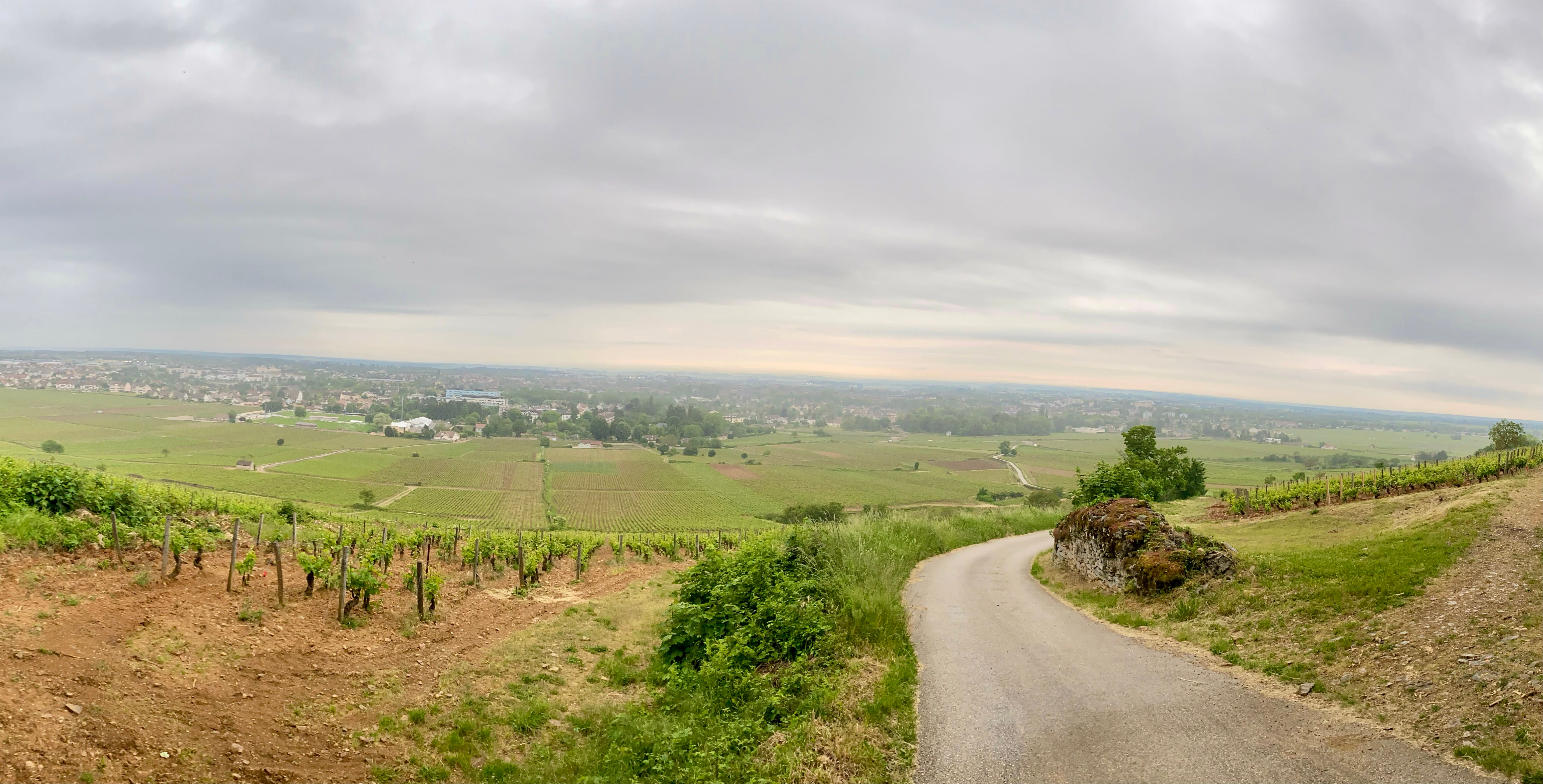
It was a cold and misty early December afternoon. I had arrived in the village of Bouilland with a couple of friends, late, lost, and running out of excuses for both. The streets seemed uninhabited except for a stray dog, a lone horse, and one unhurried chicken. Bouilland is a ten-minute drive from Savigny-lès-Beaune but on that day it felt like another time.
Desperate for help, my Burgundian winemaker friend began knocking on doors. The first opened to a man who surprisingly turned out to know him, and what followed was the banter of an unexpected reunion that takes no account of urgency. As luck would have it, though, he knew the way. We thanked him and drove on.
We arrived at a modest stone building adjacent to a small farm that looked as though it had been standing there for centuries. Everything about it seemed perfectly natural and completely fantastical. We knocked on the large front door and an older woman of modest height, with abundant grey curls, opened it with a smile and a laugh. She greeted us warmly, shrugging off the thirty minutes without a word of reproach, and invited us to sit at a large wood table beside a great fireplace hearth decorated with empty bottles of old Burgundy.
Tea was poured. We talked. For an hour the four of us discussed people and wine, the particular charm of Aligoté, and how to bring younger drinkers to Burgundy without losing what makes Burgundy what it is. At one point she turned to me and mentioned, with a cool directness, that she had noticed what I was doing in that regard. I was startled that she knew, and cared enough to take interest.
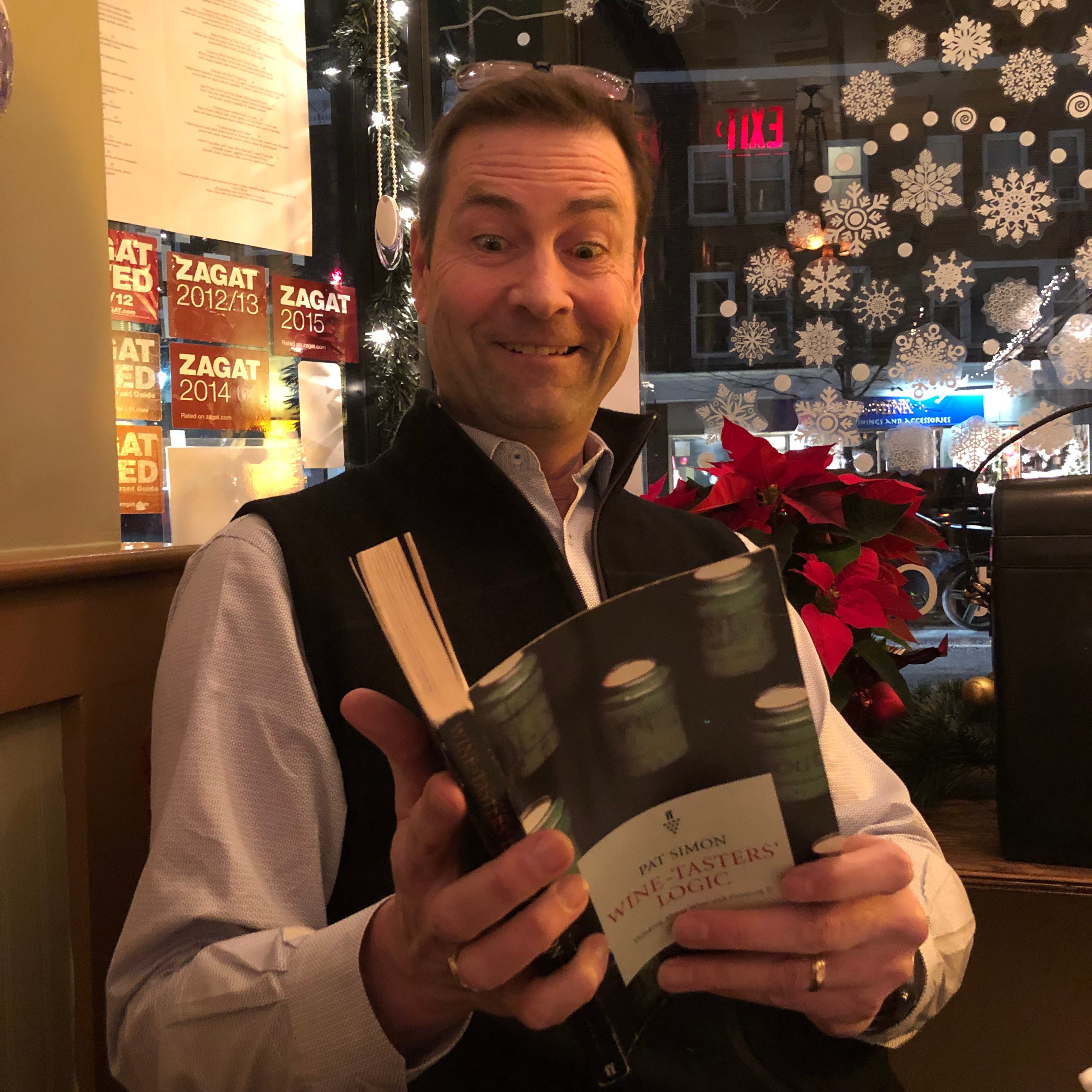
After a while the sun outside began its final descent, cueing our exit. Before leaving, she handed me a paperback book, Wine Taster’s Logic by Pat Simon. This particular title was out of print, and she had promised her copy to a mutual acquaintance back in the states. We left without taking a picture of us with Becky Wasserman-Hone. I regret it. I didn’t want to spoil the moment by asking.
No Obvious Path Forward
Becky Wasserman-Hone was born Rebecca Louisa Rand in Manhattan in January 1937, the daughter of a stockbroker and a Romanian prima ballerina who sewed her own costumes. She trained as a classical musician, attended Hunter College High School and Bryn Mawr College, and in 1968 moved with her husband, the artist Bart Wasserman, and their two young sons to a village near Beaune to begin a new life.¹
It did not unfold as planned. Her marriage ended, leaving her on her own in rural France with two sons to support and no obvious path forward. She found work with the cooperage François Frères, travelling to California selling oak barrels, consolidating orders and shipping them across the Atlantic. It was practical work, but it brought her into the cellars, and closer to the people behind the wine.
She developed close relationships with local growers, some of whom taught her to identify wines from specific parcels by taste. Gradually, her attention shifted from barrels to what was inside them. By 1979 she had founded Le Serbet, later Becky Wasserman & Co., connecting small Burgundian domaines with American buyers.
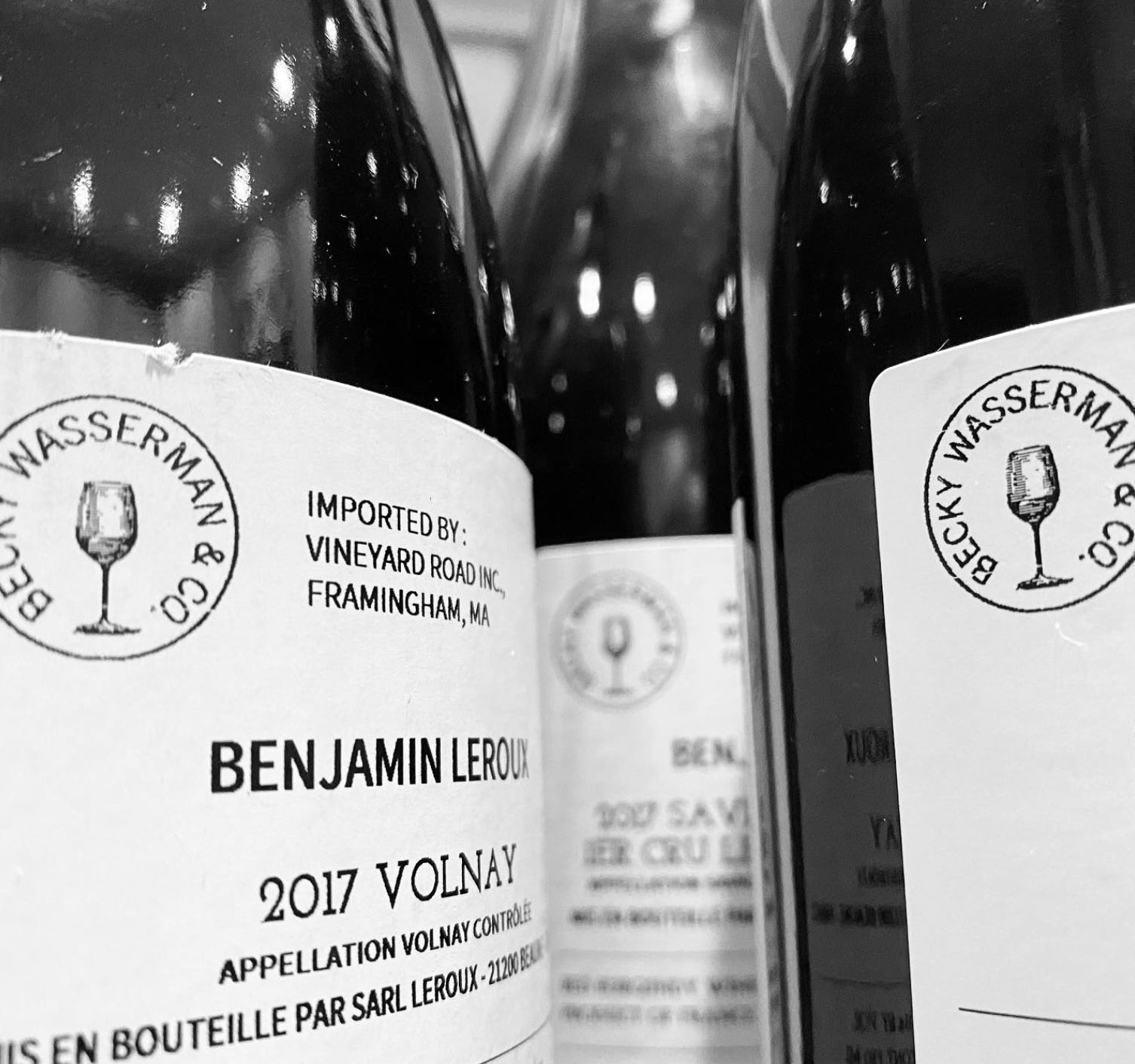
Many of these growers were largely unknown outside Burgundy. The great négociants dominated exports while smaller domaines remained local secrets. Becky built her work around those vignerons, championing estates now considered foundational to the canon of Burgundy. These were names that meant little to American buyers at the time and everything to Burgundy’s future. She could not have anticipated the success of de Montille, Lafarge, Bachelet, Lafon, and Pousse d’Or. She believed in the wines and the people who made them. Building the American market for these wines was not without its complications. She once recalled being summoned by a mafia boss who heard she was operating in his territory. He decided she was not a threat and let her be.
Her home in Bouilland became something more than a home. Over decades, she and her second husband Russell Hone hosted generations of writers, sommeliers, importers, and winemakers at their table. Alex Gambal, a winemaker and négociant who learned the trade working for her, put it plainly: “She created Burgundy as we know it today. That can’t be underestimated. So many people owe so much to her.”² Aubert de Villaine of Domaine de la Romanée-Conti said simply: “No one knows how to talk about Burgundy with so much talent, and nobody likes their wines with as much sincerity and deep knowledge as Becky.”³
She died in August 2021 at eighty-four, just a few years after my visit.⁴
I Have a Girl for That
Wine has no shortage of extraordinary women. Cathy Corison shaped a more restrained and enduring vision of Napa Cabernet. Jancis Robinson defined how the world talks about wine. Lalou Bize-Leroy pioneered biodynamic viticulture in Burgundy before almost anyone else thought to. Their influence is unmistakable. They have helped shape how wine is made, how it is valued, and how it is understood.
We are very good at telling their stories. I am not sure we are as good at listening to what those stories are trying to tell us.
Not that long ago, I heard a wine executive respond to another, casually and without hesitation, “I have a girl for that.” It is a small phrase, easy to dismiss. But it says more than it intends to.
Women account for the majority of wine purchases in the United States, roughly 55 to 59 percent depending on how it is measured. They are not a segment of the market. They are the market.⁵
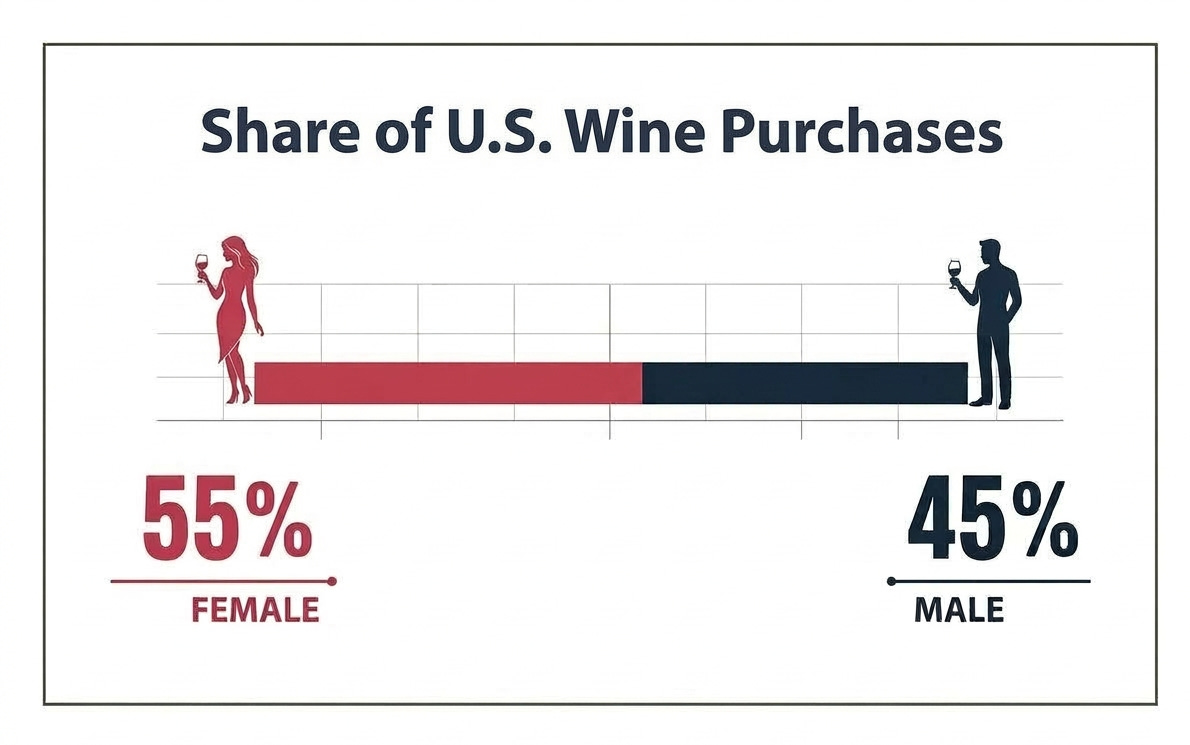
More importantly, women dominate the part of the market that sustains the business: the everyday purchase, the bottle picked up at the end of a day or placed in a grocery cart without ceremony. Most of it runs through them.
And yet much of the industry’s attention, its language, its prestige, its point of view, has been built for someone else.
A Matter of Perception
There is a concept in technology circles called the Sea of Dudes problem. It was coined by a researcher at Microsoft to describe what happens when the people building a system are so homogeneous that they cannot see whose needs they are failing to meet. When everyone in the room shares the same experience, or one group holds disproportionate influence, the room designs for itself. The result is not malice. It is something more structural, a collective blind spot so complete it does not know it is a blind spot.⁶
Caroline Criado Perez documented this dynamic across industries in her book Invisible Women. Her argument is that when decision-making groups are too homogeneous, certain needs go unrecognized because no one in the room has ever felt them. “All product design begins by deciding which problem needs solving. And that is all a matter of perception.” If the people deciding which problem needs solving all share the same perception, the same blind spots follow them into every decision they make. She also writes, “Designers may believe they are making products for everyone, but in reality they are making products for men.”⁷
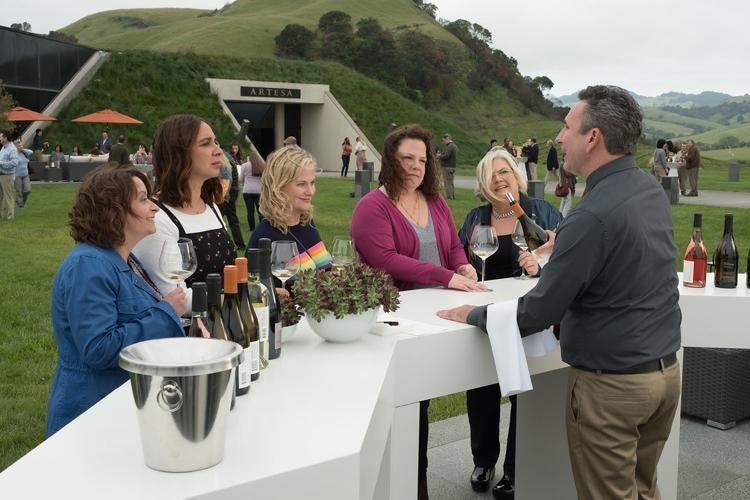
The wine industry has its own version of this problem. It shows up in scoring systems built around a particular palate, in a collector culture that treats wine like trophy hunting, in tasting room environments designed for the connoisseur more than the curious, and in trade language that leans on authority rather than invitation. None of this was designed to exclude women. It was designed in rooms that were not paying enough attention to them.
Fewer than one in five winemakers in the United States are women.⁸ But the deeper question is not so much who is in the room. It is whose perspective shapes what the room decides. Who defines what a great wine tastes like? Who writes the language of prestige? Who interprets declining demand and decides what to do about it? These are not questions about representation. They are questions about whose understanding of the customer is actually being used.
And the customer, by a significant majority, is a woman.
A Compelling Reason to Care
The U.S. wine market has been contracting for six consecutive years. Volume has fallen from 410 million cases in 2019 to 329 million in 2025.⁹ The warning signs go back further — SVB flagged the early decline as far back as 2017¹⁰ — but the industry is now living through the consequences. The premium segment, where per-bottle revenue is highest and the consumer relationship is most direct, is the industry’s best remaining growth lever. In a growing market you can afford blind spots. In a contracting one you cannot. In today’s market, wineries don’t get to misread their majority customer for free.
Women account for roughly 37 percent of high-end wine purchases according to Wine Market Council research, and as much as 59 percent of overall purchases.¹¹ This gap is not evidence that women don’t like fine wine. The way fine wine has been scored, sold, and celebrated was built primarily for affluent men. For a long time this made sense. Affluent men were the dominant buyer of fine wine and the industry was right to serve them.
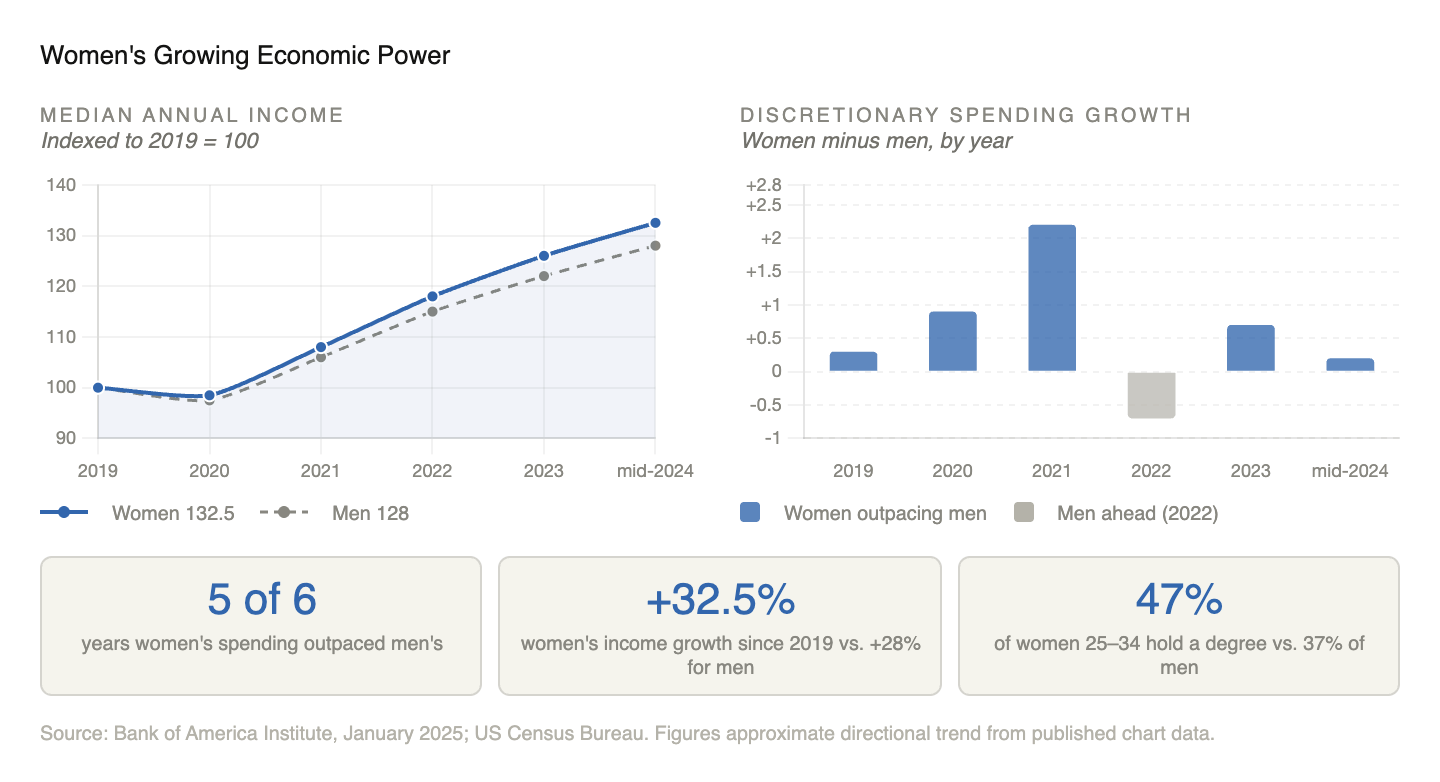
But something has changed. Bank of America data shows women’s income growing faster than men’s and their discretionary spending outpacing men’s for five of the past six years.¹² The fine wine market remains disproportionately oriented toward male collectors, even as women dominate overall purchasing and continue to grow in direct-to-consumer channels. In a market worth tens of billions of dollars, the gap between 37 percent and the majority is not a rounding error. It is the size of the opportunity.
Queena Wong, founder of Curious Vines, put it plainly in The Drinks Business: “Back in the day, we used to talk about emerging markets geographically but I do believe that women are the emerging untapped market within a luxury space.”¹³ The women who never became fine wine customers were not born indifferent to it. They were never given a compelling reason to care. The premium tier isn’t female-proof. It’s simply that until recently it’s been mostly female-neglected.
The evidence that overlooked demand can be unlocked is not theoretical. The WNBA and PWHL did not manufacture new fans. They found an audience that was already there and gave it a reason to show up. WNBA total paid attendance more than doubled between 2022 and 2024.¹⁴ Sponsorship deals in women’s sports grew 12 percent year over year in 2024 and 2025, nearly 50 percent faster than major men’s leagues.¹⁵ The lesson is not that wine should look like women’s sports. The lesson is what happens when an industry finally takes that demand seriously.
An Unlikely Invitation
I think often about that afternoon with Becky in Bouilland. It has a way of returning at moments when I am least comfortable with my own certainty.
Writing this has been one of those moments. I am aware of what it costs to say these things as a man. I have thought about people who might read this and conclude I have lost my mind, or worse, that I am naive. I am aware that for most of my career I could not have written this while employed by someone else, not because it isn’t true, but because the rooms where these decisions get made are the same rooms this post is describing. The fear of being dismissed from those rooms is real. Understanding it does not make it go away.
But I would be doing both myself and this industry a disservice by staying quiet. The evidence is clear. And I am not accountable to anyone but myself now, and that is a freedom I intend to use.
I hope the women who read this recognize something they have been saying for a long time, in rooms that were not always listening. And I hope the men who read this feel something loosen rather than tighten. This is an invitation, not an accusation.
Growth isn’t just about welcoming someone to the table. It’s about genuinely listening to what they have to say when they get there. For leadership, the goal is not to be right. It is to do right. Those are not the same thing.
The male leader who dismisses this argument is probably most in need of it. The female leader who knows this argument best has probably spent years in rooms that were not originally built for her. And I suspect she is wondering how much more she could contribute if she could find one that was.
I think a lot about Becky Wasserman, who arrived in Burgundy without a plan and left it transformed. She knew the wines she was selling were special, and through her advocacy they became what she already knew they were. The best leaders do not make people who they are. They recognize who people already are, and introduce them to the world.
At the farmhouse, at the long table, surrounded by empty bottles of old Burgundy, none of us were asked to perform. We were not asked to be someone we were not. Although we came from different places and offered different perspectives, we talked and took turns listening. And I never expected someone like Becky, so integral to everything I love about this business, would be so interested in me.
I guess I learned that in this world of wine, or any other, it’s not just about doing right by each other. It’s about doing right. And that means deciding with people, not for them, and sometimes handing over the decision entirely.
Footnotes
¹ Biographical details including birth date, family background, education, move to Burgundy, founding of Le Serbet in 1979, and the San Diego anecdote. Source: Levi Dalton interview with Becky Wasserman-Hone, I’ll Drink to That
² Alex Gambal quote: “She created Burgundy as we know it today. That can’t be underestimated. So many people owe so much to her.” Source: Alex Gambal told Wine Spectator, as reported in The Drinks Business obituary, August 2021. https://www.thedrinksbusiness.com/2021/08/burgundy-champion-becky-wasserman-dies/
³ Aubert de Villaine quote: “No one knows how to talk about Burgundy with so much talent, and nobody likes their wines with as much sincerity and deep knowledge as Becky.” Source: Decanter Hall of Fame 2019. https://www.decanter.com/premium/decanter-hall-of-fame-2019-becky-wasserman-hone-409884/
⁴ Becky Wasserman-Hone died August 2021 at eighty-four. Source: The Drinks Business obituary, August 2021. https://www.thedrinksbusiness.com/2021/08/burgundy-champion-becky-wasserman-dies/
⁵ Women account for 55 to 59 percent of US wine purchases. Sources: Washington State University and Auburn University joint study, February 2026 (55 percent). https://news.wsu.edu/press-release/2026/02/25/women-more-likely-to-choose-wine-from-female-winemakers/ Wine Market Council Benchmark Segmentation Survey 2023/2024 (55 percent); Mordor Intelligence market research (54.66 percent).
⁶ Sea of Dudes problem coined by Margaret Mitchell, researcher at Microsoft. Source: Bloomberg, June 23 2016. https://www.bloomberg.com/news/articles/2016-06-23/artificial-intelligence-has-a-sea-of-dudes-problem
⁷ Caroline Criado Perez, Invisible Women: Data Bias in a World Designed for Men (Chatto & Windus, 2019). First quote: “All product design begins by deciding which problem needs solving. And that is all a matter of perception.” Second quote: “Designers may believe they are making products for everyone, but in reality they are making products for men.”
⁸ Fewer than one in five winemakers in the United States are women. Sources: Washington State University press release, February 25 2026 (18 percent). https://news.wsu.edu/press-release/2026/02/25/women-more-likely-to-choose-wine-from-female-winemakers/ Zippia workforce data (17.8 percent).
⁹ US wine market volume declined from 410 million cases in 2019 to 329 million cases in 2025. Source: Silicon Valley Bank 2026 State of the US Wine Industry Report, January 15 2026. https://www.svb.com/trends-insights/reports/wine-report/
¹⁰ SVB flagged the early decline as far back as 2017. Source: Silicon Valley Bank 2025 State of the US Wine Industry Report; SevenFifty Daily coverage of SVB report, February 2025. https://daily.sevenfifty.com/we-cant-be-passive-anymore-silicon-valley-banks-2025-wine-report/
¹¹ Women account for roughly 37 percent of high-end wine purchases. Source: Wine Market Council High-End Consumer Study, December 2023. Defined as consumers spending $20 or more per bottle at least once per month. Sample size: 747 validated respondents.
¹² Women’s income growing faster than men’s and discretionary spending outpacing men’s for five of the past six years. Source: Bank of America Institute, What’s the Power of a Woman’s Wallet? January 2025. https://institute.bankofamerica.com/content/dam/economic-insights/womens-financial-position.pdf
¹³ Queena Wong, founder of Curious Vines, quoted in The Drinks Business, March 8 2024. https://www.thedrinksbusiness.com/2024/03/high-net-worth-women-are-the-emerging-market-for-fine-wine-but-merchants-must-invest-for-it-to-grow/
¹⁴ WNBA total paid attendance more than doubled between 2022 and 2024, from 1.2 million to 2.35 million. Sources: ESPN, September 27 2024. https://www.espn.com/wnba/story/_/id/41477940/wnba-touts-48-attendance-jump-23m-fans-attend-games
¹⁵ Sponsorship deals in women’s sports grew 12 percent year over year in 2024 and 2025, nearly 50 percent faster than major men’s leagues. Source: SponsorUnited Women in Sports Marketing Partnerships Report 2024-2025. https://www.sponsorunited.com/insights/women-in-sports-2024-25
The role of women in the selection and purchase of wine should be acknowledged and addressed with great energy and focus. You make these points well. Let's hope there is an awakening to the broader issue of marketing fine wines for occasions of use, not as trophies for a collection.