



“Cannery Row in Monterey in California is a poem, a stink, a grating noise, a quality of light, a tone, a habit, a nostalgia, a dream.”
John Steinbeck opened the novel Cannery Row with this sentence, one of the more unlikely openings in American literature, especially considering he was describing a street that processed sardines.
The canneries of Monterey were, at their peak, an industrial spectacle. They employed thousands of workers, processed millions of fish, and made fortunes. The boats, the nets, the processing lines, the rail connections all worked together, moving fish to markets across the country. It was a system finely tuned to convert an abundant natural resource into profit, and it worked so well that nobody imagined what would happen if the sardines stopped coming.
Then the sardines disappeared. Overfishing, compounded by environmental shifts, drove the Pacific sardine population into collapse. The canneries eventually went quiet. The problem was not the system. It worked exactly as designed. It just was not built to notice when the world changed.
Cannery Row survived, but not as a cannery. The industry failed, the buildings emptied, and the street eventually found new life as a tourist destination. Good pairings aside, nobody confuses wine with sardines. But the lesson is uncomfortably close. Systems built for abundance do not naturally adjust when abundance disappears.
Lately this is what I think about when I am standing in front of the wine shelf at my local store.
Same Shelf, Different Story
Last week I reviewed retail sales trends across grocery, mass, club, and similar store channels nationwide. It shocked me.
The wine category declined by mid-single-digits year-over-year in retail channels alone, representing hundreds of millions of dollars in lost sales. The true figure across all channels is likely larger.1 A majority of brands were down in value.
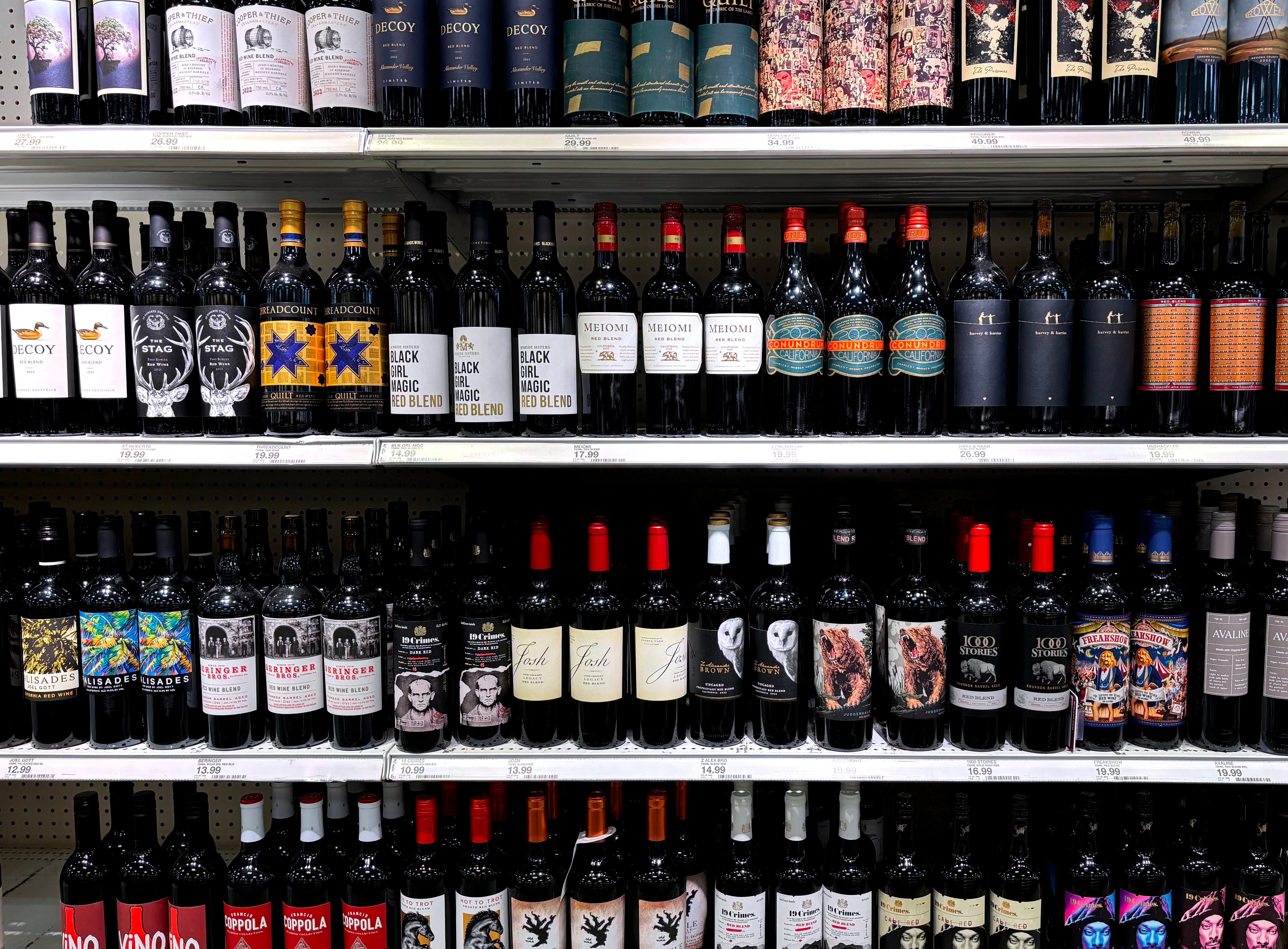
Many of the largest and most recognized brands in the category posted meaningful declines, in some cases into the double digits. Taken together, a relatively small group of high volume brands accounts for a disproportionate share of the category’s total contraction, while the remaining losses are spread across thousands of smaller labels. This is not a localized issue. It is broad.2
But not everyone is losing ground. Certain segments are still growing. New Zealand Sauvignon Blanc continues to show strength. A small number of premium brands are holding their position. A handful of newer, highly differentiated brands are growing quickly from a smaller base, often built around specific consumer preferences such as no alcohol, sweetness, higher alcohol, or alternative positioning. These brands sit side by side on the same shelves, often in the same aisle, in front of the same consumer as those in decline. Yet their outcomes are materially different.
The scale of the change is the problem. The brands losing ground are shedding hundreds of millions of dollars in annual sales, while the brands replacing them remain a fraction of that size. The issue is not whether better ideas exist. It is that too few of them make it onto the shelf, and fewer still reach the scale required to replace what is being lost. And the companies with the capital and distribution to close that gap appear structurally the least capable of doing so.
Innovation-Proof
The current U.S. wine market is a system that rewards incumbency over innovation. This happens in three places.
The first is large producers. The companies that own many of the declining brands have the capital and the distribution scale to innovate. What they do not have is the incentive structure to do so. Reinventing something that still generates revenue, even one clearly in decline, requires a level of organizational focus most large companies are not structured to provide. The risk of change is immediate. The reward is uncertain. Instead, they sustain, they tweak, and they repackage.
The second is smaller producers with the initiative to innovate but not the capital to execute. The three tier system contributes to this. A significant portion of what a bottle commands at retail never reaches the producer. A promising brand selling 25,000 cases annually has very little remaining after all tiers take their share, leaving insufficient capital to build, test, or scale anything meaningfully new.
The third is the distributors, who sit at the critical leverage point between what gets made and what gets sold. Their portfolios are large and increasingly difficult to manage as velocity declines across the category. Franchise protections, volume commitments, and the weight of established relationships make portfolios slower to evolve and costly to unwind. Working capital tied up in existing inventory limits the capacity to take on new brands, regardless of how promising they may be.
Distributors have long provided meaningful marketing and brand building support to smaller producers. In a declining market, that support shifts toward brands that offer the highest certainty of sell through, often backed by scale or contractual commitments. The smaller, more innovative brands that could replace lost velocity struggle to get attention, not because they lack merit, but because focus narrows toward what is most likely to move and must move in the near term.
This dynamic is not a market correction. It is the system working as designed.
Follow the Margin
The constraint is not just organizational. It is financial. To understand why, it helps to follow where the dollars go on a sale of a bottle of wine.
When a winery sells to a distributor, that distributor typically takes 28 to 30 percent gross margin. The retailer takes another 30 to 50 percent. Restaurants typically triple their purchase price. By the time that bottle reaches a restaurant list, the winery receives closer to a quarter of what the guest ultimately pays.3 That is the architecture.
Not every producer operates within the same structure. A large brand with genuine consumer pull captures more share of the retail price. Distributors absorb price increases rather than pass them through. Retailers may take a thinner margin because the brand drives traffic. The result is that a large producer can raise its price while its retail price holds, recovering real dollars on every bottle at scale.
Strong brands generate better margins, which fund more marketing, which builds stronger brands. The system amplifies strength. It does not correct weakness.
A mid sized winery does not have the same pricing power. Too large to rely primarily on direct to consumer sales and too small to command favorable terms from distributors, they are caught in between. Price increases pass straight through. Shelf space is fragile. In many states, franchise laws make switching distributors legally complex and financially costly.4
What this means in practice is simple. Many producers are capable of generating new ideas but are unable to fund them. They operate in a system where each incremental dollar of consumer spend is largely captured before it reaches them, leaving too little margin to invest meaningfully in innovation, marketing, or new product development. Multiply that across the category and the cumulative effect runs into hundreds of millions of dollars every year. That is capital that never reaches the point where innovation happens.
What consumers want is shifting, but the system is not directing enough capital to the producers best positioned to respond.
Who Proves & Who Profits
At a moment when wine needs new consumers, it is worth being precise about how innovation typically happens in beverage alcohol.
Hard seltzer was not invented by Gallo. Nick Shields pioneered the category with SpikedSeltzer in Connecticut in 2013. White Claw launched in 2016 and within a few years had become a cultural phenomenon. Gallo entered three years later with High Noon, not as a pioneer but as a fast follower with a genuine product insight. White Claw and Truly used fermented sugar bases. High Noon used real vodka and real fruit juice.
That differentiation mattered. But it was only available to Gallo because smaller players had already absorbed the risk of proving the concept. Gallo then took the brand national through its distribution infrastructure and ignited it culturally through marketing partnerships that reached consumers its wine brands never touched. The innovation was real. The risk was someone else’s.5

This is how the pattern works. Smaller producers prove the concept, and larger producers industrialize it. When innovative brands are acquired, capital flows to founders and investors, but the conditions that made innovation difficult to sustain remain unchanged. The next round of small producers begins from the same position as the last. The system recycles outcomes, but not opportunity.
In wine, this dynamic is more constrained. The same structure that limits the ability of smaller producers to fund innovation also slows the process by which successful ideas scale. New concepts emerge, but they struggle to reach the shelf broadly enough, or quickly enough, to replace what is being lost.
The issue is not whether innovation exists. It is whether the system allows it to scale.
What the Shelf Is Telling Us
The brands losing ground are not necessarily poor quality wines. Many were well made, clearly positioned, and supported by significant marketing investment. What they often lack is a durable connection with consumers. They were built on trends that resonated when they launched but have since faded. In many cases, they were shaped around signals like dark red blends, irreverent packaging, or lifestyle positioning that no longer carry the same force. Resources that might have funded reinvention were instead directed toward defending existing shelf position rather than adapting to changing demand.
The brands gaining ground are doing something different. New Zealand Sauvignon Blanc continues to benefit from a sustained shift toward lighter, fresher styles. Established premium producers have held their position through consistency and real brand equity. XXL, the modern-day Mad Dog, built its following around unabashed high alcohol appeal and found an audience the established players discounted. Avaline built around clean ingredients and celebrity endorsement and found a different one. These brands are not winning because they outspent the competition. They are winning because they found something real, and they found it early.
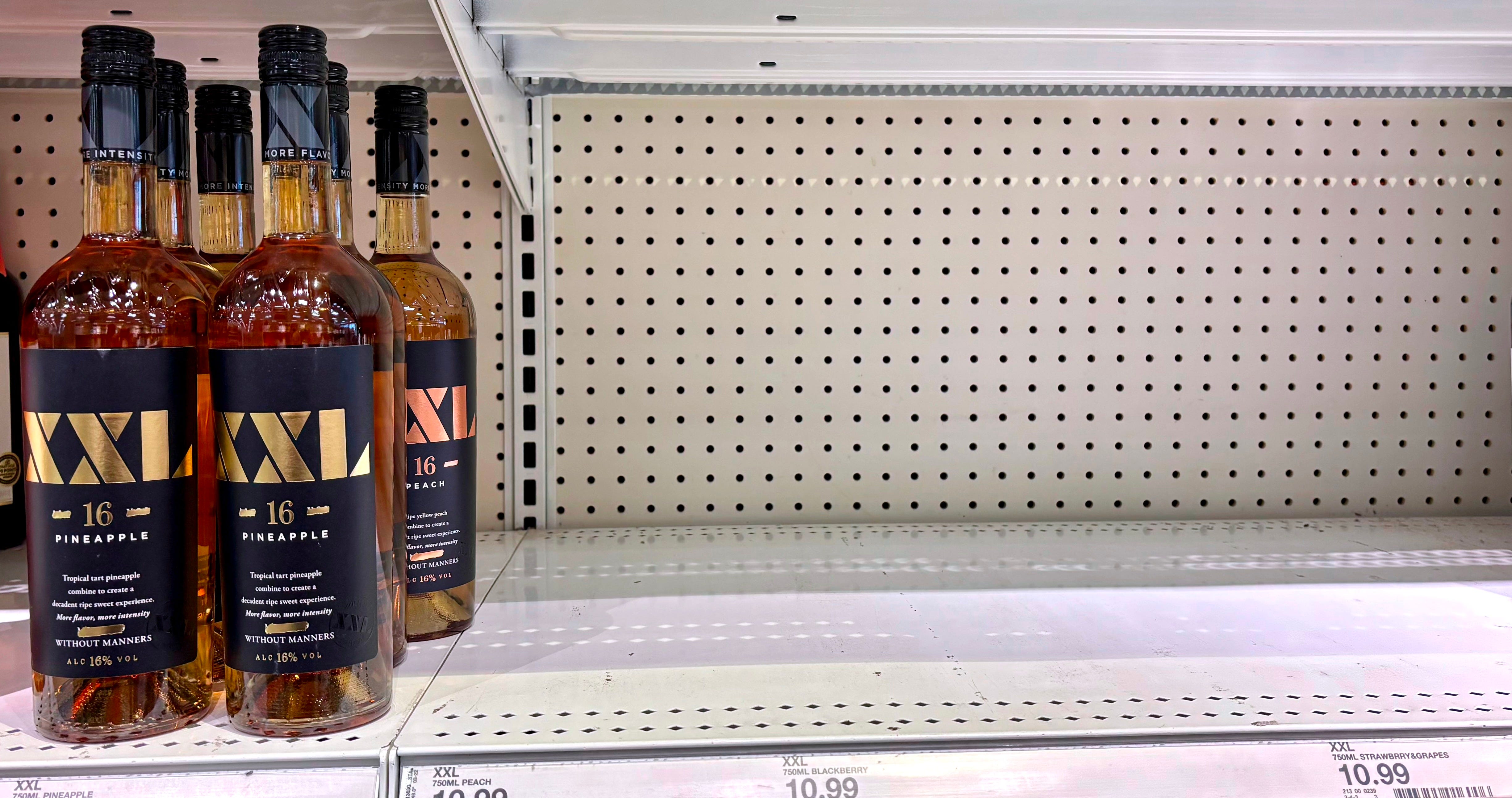
The system is highly effective at sustaining brands beyond the point where consumer momentum has shifted. It is far less effective at supporting the reinvention those brands require, or at generating enough new brands to replace what is being lost.
A structure that optimizes for the status quo cannot easily pivot when demand changes. It creates a widening gap between what exists and what consumers actually want.
The Honest Answer
The honest answer is that nothing available to most producers matches the scale of the problem. Some approaches help more than others, but none fundamentally change the structure.
Direct-to-consumer does not replace wholesale, but it can change the wholesale conversation. When a winery sells directly it captures both the distributor and retail margin, retaining far more of what the consumer pays. It also generates direct consumer data and relationships that are nearly impossible to obtain through the three tier system. As direct sales grow, dependency on any single distributor shrinks, along with it the leverage those distributors hold.
There are other tools that reduce dependency on the existing system without abandoning it entirely. These include working with lean regional distributors over national generalists and writing performance standards into new agreements. Neither is transformative. In this market, improving position is the most actionable objective available.
For producers with sufficient scale and brand equity, external capital is available. Duckhorn illustrates this clearly, going public in 2021 to fund growth, then taken private in 2024 with additional capital behind it.6 That option exists for producers who have already reached the scale to support an investment thesis. For most it does not. And when outside capital does reach smaller producers it brings its own constraints in the form of return expectations, exit timelines, and management priorities that may not align with long term positioning.
The harder truth is that what the industry needs is a system oriented toward innovation rather than incumbency. That would require changes the system itself has little incentive to make. Franchise laws protect distributor relationships. The three tier architecture captures margin at every step regardless of where investment is most needed. And the largest producers, with the most capital and the most to lose, are structurally oriented toward sustaining what they have, funding what’s next only after others have proven it.
The system does not need to be perfect. It never has been. But it does need to work well enough to support the kind of innovation wine now requires. Right now, the incentives required to make that happen do not appear to exist.7
What Comes Next
Wine in the United States is a hymn, a hangover, a homecoming, a bad habit, a seduction, a disappointment, a religion, a dream. I think Steinbeck would have called it as much.
I was not drawn to wine to write about its economics. Good Times Great Wine was never meant to be about that. But the economics matter now in a way that is hard to ignore. The people, the places, and the stories that make this industry worth caring about depend on the system working well enough to sustain them.
I was drawn to wine for the stories, the history, the mystery, the discovery, and the taste. There is nothing else quite like it. You can look at much of western civilization through the lens of wine and find it looking back at you. The same vineyards farmed by ancient Romans are still being tended on the same hillsides. That kind of continuity is rare and worth protecting.

That is what gets lost when the system stops working well enough. Steinbeck understood that life organized around outcomes alone eventually hollows out. Many who I know in this business came for something the economics alone could never explain. The winemaker farms the same hillside for thirty years. The importer travels to a region few have heard of because something in a glass inspires her. The distributor sales rep moves from store to store. The sommelier opens a bottle for a table and watches the guests glow. Most of us are here for the moments, the relationships, and the sheer beauty of it.
What the industry needs is not perfection. It needs to work well enough to direct capital to the right places, give genuine ideas enough runway to prove themselves, and preserve what drew most of us here and keeps us here still.
What comes next is up to the people willing to do something about it.
A note on sources
The structural arguments in this piece are grounded in three bodies of academic research. George Stigler’s “The Theory of Economic Regulation” (Bell Journal of Economics and Management Science, 1971) established that regulated industries tend to defend existing regulatory structures that protect incumbents from competitive pressure, a framework that maps directly onto the franchise laws insulating distributor relationships from rationalization. Venture capitalist Bill Gurley explicitly applied Stigler’s framework in his widely circulated 2023 presentation “2,851 Miles,” arguing that “regulation is the friend of the incumbent,” a formulation that applies with equal force to the three-tier system.
Josh Lerner’s “The Architecture of Innovation” (Harvard Business Review Press, 2012), drawing on research conducted with Samuel Kortum, demonstrates that established organizations are structurally poorly suited to funding transformational innovation because their incentive structures favor incremental over exploratory investment. The wine industry’s largest producers face precisely this constraint.
Rebecca Henderson and Kim Clark’s “Architectural Innovation” (Administrative Science Quarterly, March 1990) demonstrates that established firms are structurally blind to innovations that change how existing components relate to each other, because that knowledge is embedded in their structure and processes. The three-tier distribution system is precisely this kind of architectural constraint.
Endnotes
1 Retail sales data sourced from measured multi-outlet channels including grocery, mass, club, drug, and select convenience. Not all retailers participate in syndicated reporting.
2 Silicon Valley Bank, 2026 State of the U.S. Wine Industry Report, January 15, 2026. Total U.S. wine volume declined from approximately 410 million cases in 2019 to 329 million cases in 2025.
3 Industry distributor margin benchmarks: Wine Business Monthly; BinWise; Analytics.wine (2024–2025). Restaurant markup convention: Professional Drinking; Silicon Valley Bank wine industry research.
4 Several states impose legal constraints on wine pricing that go beyond franchise law. Ohio Administrative Code Rule 4301:1-1-03 mandates a minimum distributor markup of 33 and one-third percent, a legal floor not subject to negotiation. Connecticut requires minimum price posting at both the wholesale and retail level and prohibits volume discounts, meaning all retailers pay the same price regardless of size. New York requires monthly price posting by all manufacturers and wholesalers and mandates uniform pricing to all retailers. In each case the commercial flexibility that producers in other states may negotiate is constrained or eliminated by state law.
5 Hard seltzer category origins: SpikedSeltzer founded by Nick Shields, Westport, Connecticut, 2013. White Claw launched by Mark Anthony Brands, 2016. Nielsen hard seltzer category tracking (2019). High Noon case volume: IWSR data (2023).
6 Duckhorn Wine Company IPO: March 2021, NYSE: NAPA. Acquisition by Butterfly Equity closed 2024.
7 The structural arguments in this piece draw on George Stigler’s theory of regulatory capture (1971), Josh Lerner’s research on innovation incentives and capital allocation, and Rebecca Henderson and Kim Clark’s foundational research on architectural innovation.
You may not have come to wine for the economics. I'm glad you're writing about the economics though. Thank you!